
Hall Effect Keyboards in 2026: Do Magnetic Switches Actually Give a Gaming Edge?
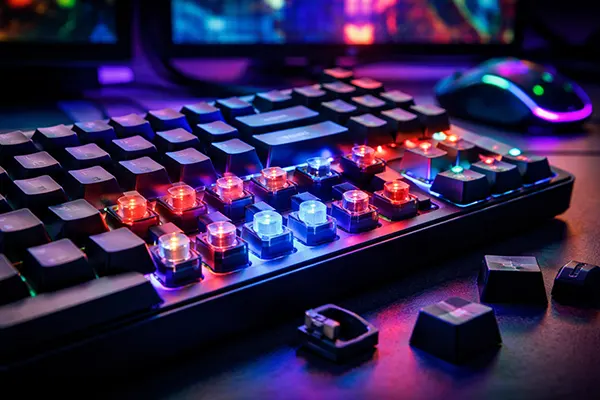
Hall Effect keyboards have shifted from niche hardware into a serious talking point among competitive players in 2026. What makes them different is not just the use of magnetic sensors, but the level of control they offer over actuation and input behaviour. Features like adjustable actuation points and Rapid Trigger are no longer experimental — they are now widely implemented by major manufacturers. The real question, however, is not whether the technology is advanced, but whether it genuinely improves performance in games or simply adds another layer of complexity to an already crowded market of gaming peripherals. :contentReference[oaicite:0]{index=0}
What Hall Effect Switches Change Compared to Traditional Keyboards
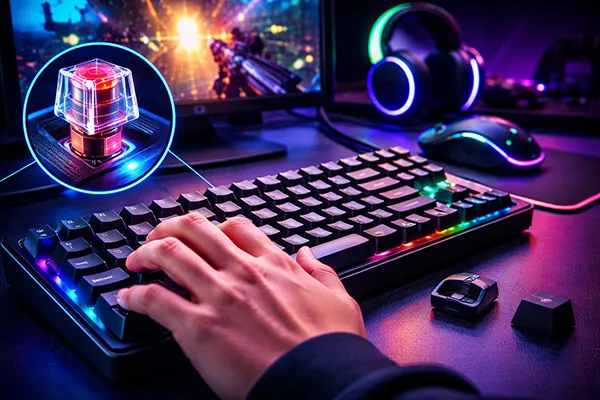
Unlike mechanical switches that rely on physical contact, Hall Effect keyboards detect key presses using magnetic fields. This removes the need for direct electrical contact, which reduces wear over time and allows for smoother input recognition. More importantly, it enables precise measurement of how far a key is pressed, rather than simply registering a binary on/off signal.
This precision is where adjustable actuation comes into play. Players can set exactly how deep a key must be pressed before it activates — from extremely shallow inputs for speed, to deeper presses for accuracy. In fast-paced games, this can translate into quicker reactions, particularly when milliseconds matter.
Another significant difference is consistency. Because magnetic sensing does not degrade in the same way as traditional contacts, performance remains stable over time. For players who practise regularly or compete, this reliability can be more valuable than raw speed alone.
Rapid Trigger and Its Practical Impact in Competitive Play
Rapid Trigger is one of the defining features of modern Hall Effect keyboards. It allows a key to reset the moment it begins to move upwards, rather than waiting for a fixed reset point. This means actions like strafing or counter-strafing in FPS titles become more responsive and fluid.
In games such as Counter-Strike 2 or Valorant, this translates into tighter movement control. Players can stop and change direction faster, which directly affects accuracy when shooting. The difference is subtle at first, but becomes noticeable with practice.
That said, Rapid Trigger is not universally beneficial. It requires adaptation, and players used to traditional keyboards may initially find it too sensitive. Without proper adjustment, it can even lead to accidental inputs, particularly in slower or more deliberate gameplay scenarios.
Who Actually Benefits from Magnetic Keyboards in 2026
Hall Effect keyboards are often marketed as a universal upgrade, but in reality, their advantages are highly dependent on how and what you play. Competitive FPS players tend to benefit the most, as movement precision and rapid input changes are critical to performance.
Rhythm game enthusiasts also gain a noticeable advantage. The ability to fine-tune actuation points allows for highly consistent timing, which is essential in games that rely on precise input windows. In this context, even minor improvements in input consistency can affect overall scores.
For everyday users or casual gamers, however, the benefits are less pronounced. Typing, general browsing, and slower-paced games do not fully utilise the advanced features. In these cases, a well-built mechanical keyboard may offer a similar experience at a lower cost.
Are They Worth It Outside Competitive Gaming?
When used outside of competitive environments, Hall Effect keyboards still offer certain advantages, such as durability and smooth key travel. The absence of physical contact reduces long-term wear, making them a reliable option for heavy daily use.
However, many of their core features remain underutilised. Adjustable actuation and Rapid Trigger do not significantly improve productivity tasks like writing or office work. In fact, overly sensitive settings can become a distraction rather than a benefit.
This makes them a more specialised tool rather than a universal upgrade. For users who value customisation and are willing to fine-tune their setup, they can be rewarding. For others, the difference may not justify the higher price.
Limitations, Costs, and What to Expect from the Market
Despite their advantages, Hall Effect keyboards are not without drawbacks. The most obvious is price. As of 2026, they remain more expensive than standard mechanical models, largely due to the complexity of their sensors and firmware.
Software also plays a critical role. To fully benefit from features like adjustable actuation, users must rely on configuration tools. Poorly designed software can limit usability, making even advanced hardware feel incomplete.
Another consideration is learning curve. These keyboards are not plug-and-play in the traditional sense. Achieving optimal performance often requires experimentation with settings, which may not appeal to players looking for immediate results.
Where Hall Effect Keyboards Are Heading Next
The direction of development suggests that Hall Effect technology will become more accessible over time. As more manufacturers enter the market, competition is likely to reduce prices and improve software ecosystems.
There is also growing interest in hybrid features, combining magnetic sensing with other technologies to enhance input accuracy further. This could lead to more adaptive keyboards that adjust behaviour based on user habits.
In the long term, Hall Effect keyboards are unlikely to replace mechanical ones entirely. Instead, they are carving out a distinct segment aimed at players who prioritise precision, control, and customisation over simplicity.
-
 Periphery
ROG Xbox Ally X in 2026: Auto SR, Ryzen AI...
Periphery
ROG Xbox Ally X in 2026: Auto SR, Ryzen AI...The ROG Xbox Ally X occupies an unusual position in 2026. It is …
-
 Periphery
500Hz QD-OLED Monitors for Esports: Is the...
Periphery
500Hz QD-OLED Monitors for Esports: Is the...For competitive gaming, 360Hz used to represent the point where refresh rates had …
-
 Periphery
PCIe 5.0 SSDs in Modern Games: Do Faster D...
Periphery
PCIe 5.0 SSDs in Modern Games: Do Faster D...PCIe 5.0 SSDs have become one of the most talked-about upgrades for gaming …
-
 Games
Neverness to Everness Review: An Open-Worl...
Games
Neverness to Everness Review: An Open-Worl...Neverness to Everness is an upcoming open-world action RPG developed by Hotta Studio, …