
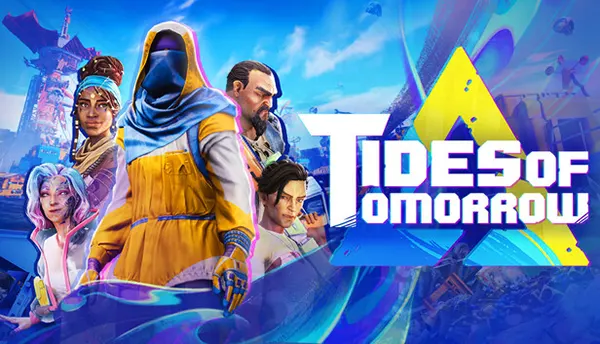
Tides of Tomorrow: How Asynchronous Storytelling Reshapes Single-Player PC Games
The structure of narrative in PC games has shifted noticeably by 2026, with asynchronous storytelling becoming one of the most discussed design approaches. Instead of delivering a fixed sequence of events, developers now build worlds where story fragments unfold based on player timing, indirect interactions, and persistent systems. This approach changes not only how stories are told, but how players interpret their role within them.
The Core Idea Behind Asynchronous Narrative Design
Asynchronous storytelling refers to a system where events do not rely on linear progression or simultaneous interaction. In modern PC games, this often means that actions taken by the player influence future outcomes in ways that are not immediately visible. Titles released in recent years have shown how environmental changes, delayed consequences, and non-linear triggers create a layered narrative experience.
Developers use persistent world states and time-independent triggers to support this structure. For example, certain story elements may activate only after specific in-game conditions are met, regardless of when the player reaches them. This removes the traditional dependency on scripted sequences and allows narratives to feel more organic.
Another important factor is the separation between cause and effect. Players may encounter the consequences of decisions long after they were made, which adds depth but also demands attention. This design encourages observation rather than constant action, reinforcing a more thoughtful style of gameplay.
Why Developers Are Moving Away from Linear Narratives
One reason for this shift is player expectation. By 2026, audiences are more familiar with open-ended systems and expect flexibility in how they experience stories. Linear storytelling can still be effective, but it often limits replay value and reduces the sense of personal involvement.
Technical advancements also play a role. Modern PC hardware allows for complex simulations, persistent environments, and large-scale data tracking within a game world. These capabilities make it easier to maintain asynchronous systems without breaking immersion or performance.
Finally, asynchronous storytelling aligns with broader trends in interactive media. It mirrors how people consume content across different platforms—at their own pace, with partial information, and through fragmented experiences that gradually form a complete picture.
Impact on Player Experience and Engagement
The most noticeable effect of asynchronous storytelling is the shift in how players engage with the game world. Instead of following a clear path, players explore and interpret events independently. This leads to a more personalised experience, where no two playthroughs are identical.
Games built around this concept often rely on environmental storytelling. Clues are embedded in locations, character behaviour, and world changes rather than direct exposition. As a result, players become active participants in reconstructing the narrative rather than passive recipients.
This approach also introduces a different pacing structure. Players are not constantly guided by objectives or dialogue. Instead, they move between moments of discovery and reflection, which can create a more immersive and less predictable rhythm.
Emotional and Cognitive Effects on Players
Asynchronous narratives tend to create a stronger sense of curiosity. Since information is incomplete and scattered, players are encouraged to connect details on their own. This process often leads to deeper emotional investment, as discoveries feel earned rather than delivered.
There is also a cognitive shift in how players process information. Traditional storytelling provides context upfront, while asynchronous design requires players to build context gradually. This can be more demanding, but also more rewarding for those who engage fully.
However, this design is not without challenges. Some players may find the lack of clear direction frustrating, especially if key narrative elements are easy to miss. Developers must balance freedom with subtle guidance to maintain accessibility.

Technological Foundations Supporting Asynchronous Worlds
Modern PC games rely on several technical systems to support asynchronous storytelling. Persistent world simulation is one of the most important. This ensures that changes in the environment remain consistent over time, even if the player is not present when they occur.
Another key component is modular narrative design. Instead of writing a single storyline, developers create interconnected narrative fragments that can be triggered in various orders. This allows for flexibility without sacrificing coherence.
Artificial intelligence also plays a growing role. NPC behaviour can now adapt to changing conditions, making interactions feel less scripted. This contributes to the illusion of a living world where events unfold independently of the player.
Examples of Implementation in Recent PC Titles
Several PC games released between 2023 and 2026 have demonstrated practical uses of asynchronous storytelling. These titles often feature worlds that evolve over time, with events occurring whether or not the player witnesses them directly.
One common technique is delayed narrative resolution. Players might encounter the aftermath of an event before learning what caused it, which encourages exploration and interpretation. This approach creates a sense of realism, as not everything is presented in a convenient order.
Another example is shared but indirect interaction systems. While primarily single-player, some games incorporate traces of other players’ actions into the environment. This blurs the line between solitary and collective experience without requiring real-time multiplayer features.
-
 Periphery
ROG Xbox Ally X in 2026: Auto SR, Ryzen AI...
Periphery
ROG Xbox Ally X in 2026: Auto SR, Ryzen AI...The ROG Xbox Ally X occupies an unusual position in 2026. It is …
-
 Periphery
500Hz QD-OLED Monitors for Esports: Is the...
Periphery
500Hz QD-OLED Monitors for Esports: Is the...For competitive gaming, 360Hz used to represent the point where refresh rates had …
-
 Periphery
PCIe 5.0 SSDs in Modern Games: Do Faster D...
Periphery
PCIe 5.0 SSDs in Modern Games: Do Faster D...PCIe 5.0 SSDs have become one of the most talked-about upgrades for gaming …
-
 Games
Neverness to Everness Review: An Open-Worl...
Games
Neverness to Everness Review: An Open-Worl...Neverness to Everness is an upcoming open-world action RPG developed by Hotta Studio, …