
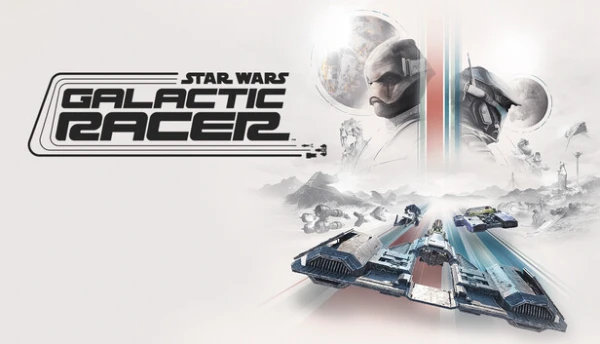
Star Wars: Galactic Racer – Racing, Controls and Competition Explained
Star Wars: Galactic Racer brings high-speed vehicle racing to the Outer Rim, combining dangerous circuits, aggressive driving and a story-driven championship. Developed by Fuse Games and published by Secret Mode, the game was released on 6 October 2026 for PC, PlayStation 5 and Xbox Series X|S. Players compete in the Galactic League, an underground racing competition established after the fall of the Galactic Empire. Unlike traditional racing games, Galactic Racer combines vehicle handling, tactical collisions, upgrades and a campaign in which unsuccessful attempts can have lasting consequences. Its main attractions include four vehicle classes, competitive multiplayer, several racing modes and courses set across recognisable Star Wars locations.
How Racing Works in Star Wars: Galactic Racer
Races in Star Wars: Galactic Racer take place on dangerous circuits where maintaining speed is only one part of winning. Competitors can ram opponents, force them into obstacles and perform takedowns to gain positions. Tracks feature alternative routes, environmental hazards and sections that reward different approaches to driving. A shorter route may offer an advantage, but navigating it successfully can require greater precision. Players must constantly decide whether to pursue maximum speed, protect their vehicle or interfere with another racer. These decisions become particularly important when several competitors approach a narrow section together.
The game features racing locations across seven planets: Jakku, Tatooine, Ando Prime, Sentinel I, Lantaana, Derven Acos and Crait. Each environment introduces distinctive scenery and driving challenges. Jakku features the wreckage of Imperial warships in the Graveyard of Giants, while Tatooine includes the famous Mos Espa podracing circuit from Star Wars: Episode I – The Phantom Menace. Ando Prime brings icy surroundings, Sentinel I offers volcanic landscapes, and Lantaana features dense vegetation. Crait adds the striking contrast of red mineral deposits beneath a white salt surface. Learning individual tracks is essential because obstacles, visibility and available routes influence racing decisions.
Unlike a conventional championship built around completing a fixed sequence of races, the main campaign uses a runs-based structure. Players select events as they progress through the Galactic League, with their decisions influencing the challenges and rewards available during that attempt. Crashing too many times can end the current tour, requiring another attempt to reach the final stages. However, certain unlocks and benefits carry over, allowing players to improve their prospects on subsequent runs. This approach gives individual races greater importance: avoiding a serious accident can sometimes be more valuable than risking everything to gain one position.
Vehicle Classes and Their Different Racing Styles
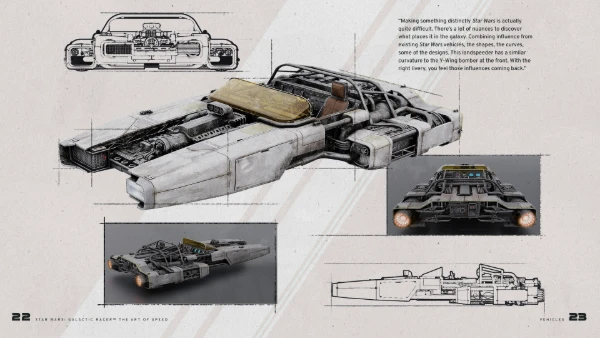
Star Wars: Galactic Racer includes four main categories of racing vehicles: landspeeders, speeder bikes, skim speeders and podracers. They are not simply different appearances for the same vehicle. Each category has its own handling characteristics, advantages and limitations. Landspeeders are relatively heavy machines that favour controlled drifting and physical contact. Their substantial feel makes them suitable for players who prefer predictable movement and a more forceful approach to overtaking. They can be particularly useful on routes where maintaining control through repeated corners matters more than achieving the highest possible straight-line speed.
Speeder bikes offer a different balance. Their quick acceleration and strong straight-line performance make them appealing for aggressive overtaking, but controlling them through difficult corners requires greater care. Skim speeders behave more like aircraft, using pronounced banking movements to navigate bends. Their unusual handling introduces additional challenges, particularly when the racing line changes rapidly. Podracers represent the extreme end of the vehicle selection, offering exceptional speed while demanding precise control. Their design draws directly on the distinctive engines and narrow racing arrangements associated with Star Wars podracing. Choosing between these vehicles changes how players approach acceleration, cornering and dangerous sections.
Vehicle selection should therefore depend on both the circuit and the driver’s preferred approach. A landspeeder may feel more forgiving when navigating crowded sections, whereas a speeder bike rewards careful acceleration and cleaner lines. Skim speeders require practice to understand their banking behaviour, and podracers make mistakes especially costly at high speeds. The game also allows players to customise their vehicles with parts that influence performance and provide additional abilities. Rather than assuming the fastest vehicle is always the best, it is more useful to consider how consistently a particular machine can complete a difficult course without losing time through collisions or poor cornering.
Controls, Boost Systems and Vehicle Customisation
Star Wars: Galactic Racer uses accessible arcade-style driving controls, although mastering its vehicles requires practice. The essential actions involve steering, acceleration, braking, cornering and managing additional speed. Precise steering is especially important because the game frequently places obstacles close to the racing line. Players must also account for the differences between vehicle classes: techniques that work comfortably in a landspeeder may produce less predictable results in a skim speeder. The game supports controllers, while the PC version also offers keyboard controls. Control reminders and adjustable difficulty options help players become familiar with the handling system.
One of the central driving mechanics involves two different boost systems: Afterburner and Ramjet. Afterburner provides a shorter burst of additional speed and is useful when accelerating out of a corner or recovering momentum. Ramjet delivers substantially greater acceleration but introduces the risk of overheating. Continuing to use it beyond the vehicle’s safe operating limit can cause a catastrophic failure. This distinction prevents players from treating every straight section as an opportunity for unlimited acceleration. Effective driving requires monitoring the available boost, recognising suitable sections of track and releasing the Ramjet before the heat becomes dangerous.
Physical contact is another important part of vehicle control. Players can shunt opposing racers, disrupt their driving line and force them into obstacles. A successful takedown can remove a nearby threat and create an opportunity to advance through the field. However, attacking another vehicle also carries risks. Poorly timed contact can leave the attacking racer facing a barrier, losing momentum or suffering damage. In crowded races, positioning is often more important than simply approaching another vehicle at maximum speed. A controlled collision on the exit of a corner can be more effective than an uncontrolled impact in the middle of a narrow passage.
Upgrades, Boost Timing and Practical Driving Techniques
Vehicle customisation plays a significant role in the campaign. Between events, players can visit paddock areas where other competitors gather and where the Ardennian mechanic Hibi operates her workshop. New components can be earned through racing or purchased using Galactic Credits. These parts provide different improvements and abilities, allowing players to develop a vehicle around their preferred racing style. Some configurations favour greater speed, while others offer advantages that can help with survival or aggressive driving. Since individual campaign attempts involve different event choices, the most useful upgrades can change depending on the challenges that lie ahead.
Improving lap times begins with consistent cornering rather than constant boosting. Players should observe upcoming bends, reduce speed before particularly difficult sections and avoid unnecessary steering corrections. Afterburner is useful when accelerating onto a straight, while Ramjet is better reserved for situations where the player can safely maintain high speed. Watching the heat indicator is essential when using the stronger boost. It is also worth learning where alternative routes reconnect with the main circuit. A shortcut only provides an advantage if the time gained exceeds any speed lost through difficult manoeuvres or collisions.
For players struggling with repeated crashes, a more conservative vehicle configuration and route choice can improve results. Learning a circuit with a relatively manageable landspeeder provides an opportunity to understand its corners, obstacles and overtaking points before attempting more demanding vehicles. In multiplayer, maintaining enough space to recover from an opponent’s attack is equally important. Drivers should avoid committing to risky contact when their vehicle is already unstable or damaged. The broader lesson is that Galactic Racer rewards controlled aggression: speed creates opportunities, but sound positioning, reliable handling and well-timed boosts determine whether those opportunities produce a successful finish.
Campaign, Multiplayer and Competitive Racing Modes
The single-player campaign follows Shade, a racer who enters the Galactic League with a personal grievance against the powerful Bool family. The central opponent is Kestar Bool, an influential champion who uses his position to intimidate other racers and maintain control over the competition. Shade receives assistance from Hibi and encounters Sebulba, the veteran podracer familiar from The Phantom Menace. The story progresses through races, conversations and decisions made between events. Rather than presenting a conventional championship table alone, the campaign combines competitive driving with rivalries, character interactions and choices that influence each attempt to advance through the League.
Campaign progression depends on completing selected events while preserving the opportunity to continue. Players can choose between different challenges and earn upgrades that influence their performance in later races. Failure is an intended part of this structure. If a tour ends because of repeated crashes, the next attempt begins with a fresh set of decisions, although certain previously earned benefits remain available. This makes the campaign different from a traditional racing career in which players simply restart the same event until they win. The emphasis falls on gradually improving driving skills, understanding upgrade combinations and making better choices throughout a complete series of races.
Outside the campaign, Galactic Racer includes Arcade and Scenario modes that offer alternative ways to compete. Arcade events provide predefined racing challenges and opportunities to use different vehicles, including famous Star Wars racers. Scenario events concentrate on particular objectives rather than reproducing the full campaign structure. These modes are useful for players who want shorter sessions or prefer practising specific aspects of driving without committing to another campaign run. The Deluxe Edition adds three exclusive Arcade events alongside additional vehicles and cosmetic content. These extras supplement the standard game’s racing activities rather than replacing its core campaign or multiplayer features.
Online Multiplayer, Racing Tours and Competitive Strategy
Online multiplayer supports cross-platform competition between PC, PlayStation 5 and Xbox Series X|S players. Standard repulsorcraft races can accommodate up to 12 competitors, while podracing events use smaller grids of up to eight racers. The game offers shorter competitive races as well as longer Tour events that connect several races into a single competition. In Tour mode, players can develop their vehicles between stages, introducing an additional layer of decision-making beyond individual lap times. Cross-platform support helps bring competitors together regardless of their preferred gaming system, although an internet connection is required for online racing.
Tour competitions are particularly interesting because vehicle development continues between races. Participants can improve statistics and select components that affect how their machines perform in subsequent events. As a result, an early advantage does not guarantee victory throughout the competition. Players must consider whether to strengthen an existing advantage or compensate for weaknesses that opponents could exploit later. Different racer loadouts also influence starting abilities and available tactical options. Competitive success depends on adapting to the evolving field, rather than using exactly the same approach on every circuit. A configuration designed for aggressive takedowns may perform differently from one prioritising consistent speed and survival.
Players entering online races should first become comfortable with at least one vehicle class and learn several circuits in Arcade or Campaign mode. Understanding where opponents are likely to brake, accelerate or attempt a shunt makes crowded races easier to manage. It is also important to recognise when to defend a position rather than challenge immediately for another one. A risky attack near the end of a longer Tour can erase advantages earned over several previous races. Star Wars: Galactic Racer ultimately combines familiar arcade racing with vehicle customisation, destructive competition and consequences that extend beyond a single finish line. Its strongest challenge is not simply reaching maximum speed, but learning when to use it.
-
Games
Star Wars: Galactic Racer – Racing, Contro...
Star Wars: Galactic Racer brings high-speed vehicle racing to the Outer Rim, combining …
-
 Periphery
ROG Xbox Ally X in 2026: Auto SR, Ryzen AI...
The ROG Xbox Ally X occupies an unusual position in 2026. It is …
-
 Periphery
500Hz QD-OLED Monitors for Esports: Is the...
For competitive gaming, 360Hz used to represent the point where refresh rates had …
-
 Periphery
PCIe 5.0 SSDs in Modern Games: Do Faster D...
PCIe 5.0 SSDs have become one of the most talked-about upgrades for gaming …