
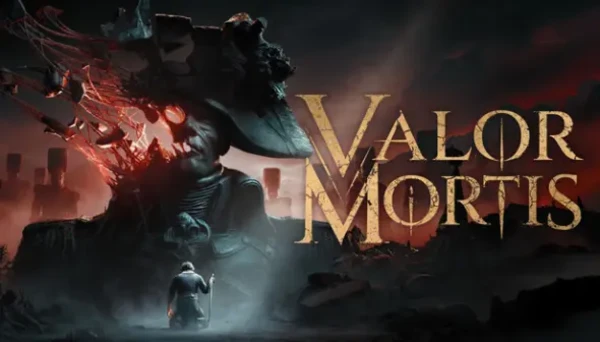
Valor Mortis – First-Person Soulslike Gameplay, Combat System and Control Precision
Valor Mortis takes the familiar principles of the Soulslike genre in a different direction by combining first-person sword fighting, supernatural abilities and an alternative interpretation of the Napoleonic Wars. Developed by the Polish studio One More Level, known for the Ghostrunner series, the game was released on 13 October 2026 for PC, PlayStation 5 and Xbox Series X|S. Rather than relying exclusively on character progression and increasingly powerful equipment, Valor Mortis places considerable emphasis on individual skill, spatial awareness, attack timing and accurate movement. Its combat system rewards patience, observation and deliberate decisions, whilst its historical horror setting gives the experience an identity that distinguishes it from conventional dark fantasy action RPGs.
What Makes Valor Mortis Different from Traditional Soulslike Games?
The first-person perspective represents the most significant departure from established Soulslike conventions. Games such as Dark Souls, Elden Ring and Lies of P generally allow players to observe their character and surrounding opponents from an external viewpoint. Valor Mortis removes that advantage, presenting every confrontation directly through the protagonist’s eyes. Judging the distance between combatants, recognising changes in an opponent’s posture and identifying threats outside the immediate field of vision become essential skills. Even familiar actions such as retreating from an incoming strike acquire a different character when players cannot see their entire surroundings simultaneously. The result is a combat experience in which positioning matters almost as much as the ability to execute an accurate attack.
One More Level builds upon its experience with Ghostrunner without simply reproducing its earlier formula. Whereas Ghostrunner largely concentrates on rapid movement and immediate reactions, Valor Mortis introduces a more deliberate approach to confrontation. Players must consider their remaining stamina, the characteristics of their chosen weapon and the potential consequences of committing to an attack. Aggressive movement remains useful, particularly when dealing with ranged opponents or navigating hazardous environments, but speed alone rarely provides a dependable solution. The game establishes a distinction between moving quickly and making decisions quickly, encouraging players to recognise when an encounter requires patience rather than continuous offensive pressure.
Another distinctive feature is the relationship between historical weaponry and supernatural combat. Swords, muskets and flintlock pistols retain recognisable characteristics associated with their historical counterparts, yet their effectiveness is complemented by powers connected to the mysterious substance known as Nephtoglobin. This combination gives confrontations greater variety than a purely historical action game could offer. Players can alternate between close-range fencing, carefully aimed shots and abilities that influence the behaviour or vulnerability of opponents. These mechanics also create opportunities to approach difficult encounters differently instead of repeating an unsuccessful sequence of attacks.
Alternative Napoleonic History and the Atmosphere of Horror
The story follows William Dowsett, an Englishman who joined Napoleon’s Grande Armée after becoming disillusioned with the monarchy. Following his death on the battlefield, William awakens under circumstances that challenge his understanding of both the war and his own identity. In this fictional interpretation of nineteenth-century Europe, Napoleon’s military ambitions have become intertwined with a destructive supernatural force. The Crimson Plague has transformed soldiers, devastated settlements and created conditions in which the distinction between military conflict and biological horror has largely disappeared. Historical references provide a recognisable foundation, but the narrative deliberately departs from recorded events.
The visual direction reinforces the relationship between warfare and horror through ruined settlements, abandoned military positions, damaged historical architecture and landscapes marked by prolonged conflict. Military uniforms, period weapons and architectural details establish the historical context without making the game dependent on strict realism. The unsettling appearance of infected soldiers is particularly effective because their equipment and movements still resemble those of ordinary human combatants. Encountering a familiar military silhouette that subsequently reveals unnatural characteristics creates a different form of tension from facing conventional fantasy creatures.
Environmental storytelling also contributes to the game’s structure. Journal pages, traces of former battles and encounters with surviving characters provide information about the circumstances surrounding the plague and Napoleon’s campaign. Figures such as the Shrike introduce perspectives that challenge the protagonist’s original loyalty to the Emperor. The narrative therefore extends beyond William’s immediate struggle for survival, addressing military obedience, personal identity and the consequences of pursuing political ambitions through increasingly destructive means. These themes give exploration a purpose beyond collecting equipment, as abandoned locations frequently contain information that helps explain how the surrounding world reached its present condition.
Valor Mortis Combat System: Weapons, Parries and Supernatural Abilities
Combat revolves around the interaction between health, stamina, enemy posture and the player’s ability to recognise an appropriate opening. Light attacks generally offer a safer opportunity to inflict damage without committing to a lengthy movement, whereas heavy strikes require greater consideration of timing and distance. A poorly timed attack can leave William exposed because an offensive animation cannot simply be interrupted with a parry. This restriction gives individual inputs greater significance and discourages repeatedly pressing attack buttons in the hope of overwhelming an opponent. Preserving enough stamina to respond defensively is often more valuable than attempting to complete an additional offensive sequence.
The available melee weapons support noticeably different fighting approaches. The Sabre offers a balanced introduction to blocking and deflecting attacks, making it a practical choice for players learning enemy behaviour. The Rapier favours precise defensive timing and controlled offensive exchanges, whilst the Claymore delivers substantial impact at the cost of slower handling and reduced flexibility. Choosing between these weapons involves more than comparing damage figures. Their reach, defensive properties and attack duration influence the positions from which players can fight effectively. A weapon that performs well against an isolated opponent may require considerably more care when several enemies are approaching simultaneously.
Firearms add another dimension to combat without replacing the importance of melee fighting. The pistol provides a useful ranged option, whilst the Musket offers greater power and engagement distance. Ammunition management prevents players from treating these weapons as an unlimited alternative to close combat. Certain enemies possess vulnerable growths that can be targeted to produce additional benefits, including replenishing Nephtoglobin. Supernatural abilities, referred to as Transmutations, expand these possibilities further. Fire can apply burning effects, Shield provides protection with an offensive follow-up, and Stasis offers another means of controlling difficult opponents. Grapple also extends William’s mobility, connecting combat opportunities with environmental navigation.
Defensive Timing, Enemy Posture and Boss Encounters
Parrying is among the most important mechanics for players using weapons that support this defensive action. Successfully deflecting an incoming strike contributes to breaking an opponent’s posture, potentially creating an opportunity for a powerful finishing attack. However, the appropriate moment to parry depends on the actual movement of the enemy rather than the first indication that an attack is beginning. Opponents frequently vary their rhythm, using pauses and delayed strikes to punish premature reactions. Learning to distinguish an initial preparation movement from the moment of impact is consequently an important part of becoming more consistent in combat.
Blocking and dodging provide alternatives when attempting a parry would involve unnecessary risk. With suitable equipment, blocking can help William survive an unfamiliar attack, although it is not entirely without consequences. Following a successful block with a prompt counterattack can recover health lost during that defensive exchange. Dodging becomes particularly important against attacks that cannot be blocked or deflected, including those identified by red visual warnings. A perfectly timed dodge briefly slows the action, giving players an opportunity to reassess their position. These defensive options encourage flexibility rather than dependence on a single response to every enemy.
Boss encounters bring these mechanics together by demanding sustained concentration across extended combat sequences. Larger opponents create additional challenges because their movements can occupy a substantial portion of the screen, making distance and attack direction harder to judge. One More Level addresses this through changes to the field of view during certain confrontations, improving the visibility of oversized enemies. Nevertheless, success still depends heavily on recognising recurring attack sequences, maintaining sufficient stamina and avoiding unnecessary offensive commitments. Players who initially concentrate on surviving and observing a boss can often identify more reliable opportunities to inflict damage than those who immediately attempt to maximise their offensive output.
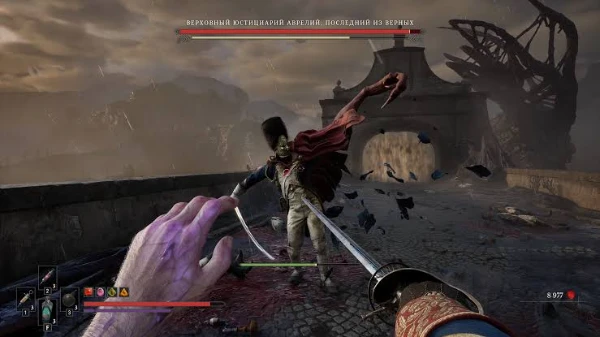
Control Precision, Character Progression and the Player Experience
Accurate controls are especially important in Valor Mortis because the first-person camera establishes a close relationship between player input and the action visible on screen. Small adjustments to viewing direction can determine whether a firearm shot reaches an enemy’s weak point or whether a melee attack connects at an appropriate distance. Movement inputs also influence the player’s ability to remain within effective striking range without becoming vulnerable to retaliation. Unlike action games that place greater emphasis on automated attack sequences, Valor Mortis frequently requires deliberate adjustments to orientation and positioning throughout an encounter. Developing consistent movement habits can therefore improve performance without requiring substantial changes to character statistics.
The PC edition supports keyboard and mouse controls alongside compatible controllers, including Xbox controllers, DualSense and wired DualShock controllers. Keyboard and mouse input offers practical advantages when making rapid adjustments to aiming direction, whilst analogue sticks provide gradual control over movement and camera rotation. Neither method automatically guarantees better combat performance. Players benefit more from selecting comfortable sensitivity settings and becoming familiar with the placement of essential defensive actions. Excessively high camera sensitivity can make close-range confrontations difficult to follow, whereas overly slow rotation may create problems when responding to enemies approaching from different directions.
The condition of the combat system has also changed since release. In its update dated 21 October 2026, One More Level adjusted the areas in which enemy attacks register damage and revised the timing of several offensive movements. These changes were intended to reduce situations in which an attack appeared to miss but still inflicted damage. The studio also improved the visual preparation of selected enemy strikes. A subsequent update on 23 November introduced further balancing changes and corrected a problem that affected weapon reach during certain boss encounters. These adjustments are particularly relevant to a game whose difficulty depends on players being able to trust the relationship between visible movements and registered hits.
Character Builds, Exploration and Developing Consistent Combat Skills
Character progression provides additional opportunities to adapt the experience to individual preferences. Catalysts serve as an upgrade resource and can be spent at Lanterns to improve William’s attributes, including health, stamina and defensive capabilities. Defeat causes accumulated Catalysts to be dropped, introducing a familiar Soulslike incentive to return to the location where the previous attempt ended. Ambers offer another level of personalisation by modifying aspects of a character build. Their usefulness depends on the player’s preferred equipment and fighting habits. Investing in a defensive setup may provide greater practical benefits for someone learning enemy movements than pursuing additional offensive strength at every available opportunity.
Exploration combines interconnected environments with movement mechanics influenced by the Metroidvania genre. William’s mobility allows players to reach additional areas, identify alternative approaches to opponents and search locations for useful resources. Grappling and wall-running sequences occasionally shift the emphasis away from deliberate sword fighting towards the faster movement associated with One More Level’s previous games. The contrast is not always seamless, particularly in confined areas containing environmental hazards and multiple enemies. Nevertheless, careful observation of unfamiliar surroundings can reveal advantageous positions, reduce exposure to ranged attacks and prevent avoidable confrontations with several opponents at once.
As of November 2026, Valor Mortis stands out as a distinctive but demanding interpretation of first-person action RPG design. Its approximately 20-hour main campaign combines methodical sword fighting with historical horror, supernatural combat and sections that require precise navigation. The limited initial variety of weapons and abilities, delayed enemy attacks and occasionally restrictive environments may frustrate players who prefer more immediately accessible combat. However, its interconnected defensive and offensive mechanics provide meaningful opportunities for improvement through practice. Players who appreciate the posture-based confrontations of Sekiro, the movement precision of Ghostrunner and the progression systems of traditional Soulslike games are likely to find particularly recognisable qualities in Valor Mortis, even though its first-person perspective requires a substantially different approach to mastering them.
-
Games
Valor Mortis – First-Person Soulslike Game...
Valor Mortis takes the familiar principles of the Soulslike genre in a different …
-
 Games
Star Wars: Galactic Racer – Racing, Contro...
Star Wars: Galactic Racer brings high-speed vehicle racing to the Outer Rim, combining …
-
 Periphery
ROG Xbox Ally X in 2026: Auto SR, Ryzen AI...
The ROG Xbox Ally X occupies an unusual position in 2026. It is …
-
 Periphery
500Hz QD-OLED Monitors for Esports: Is the...
For competitive gaming, 360Hz used to represent the point where refresh rates had …